
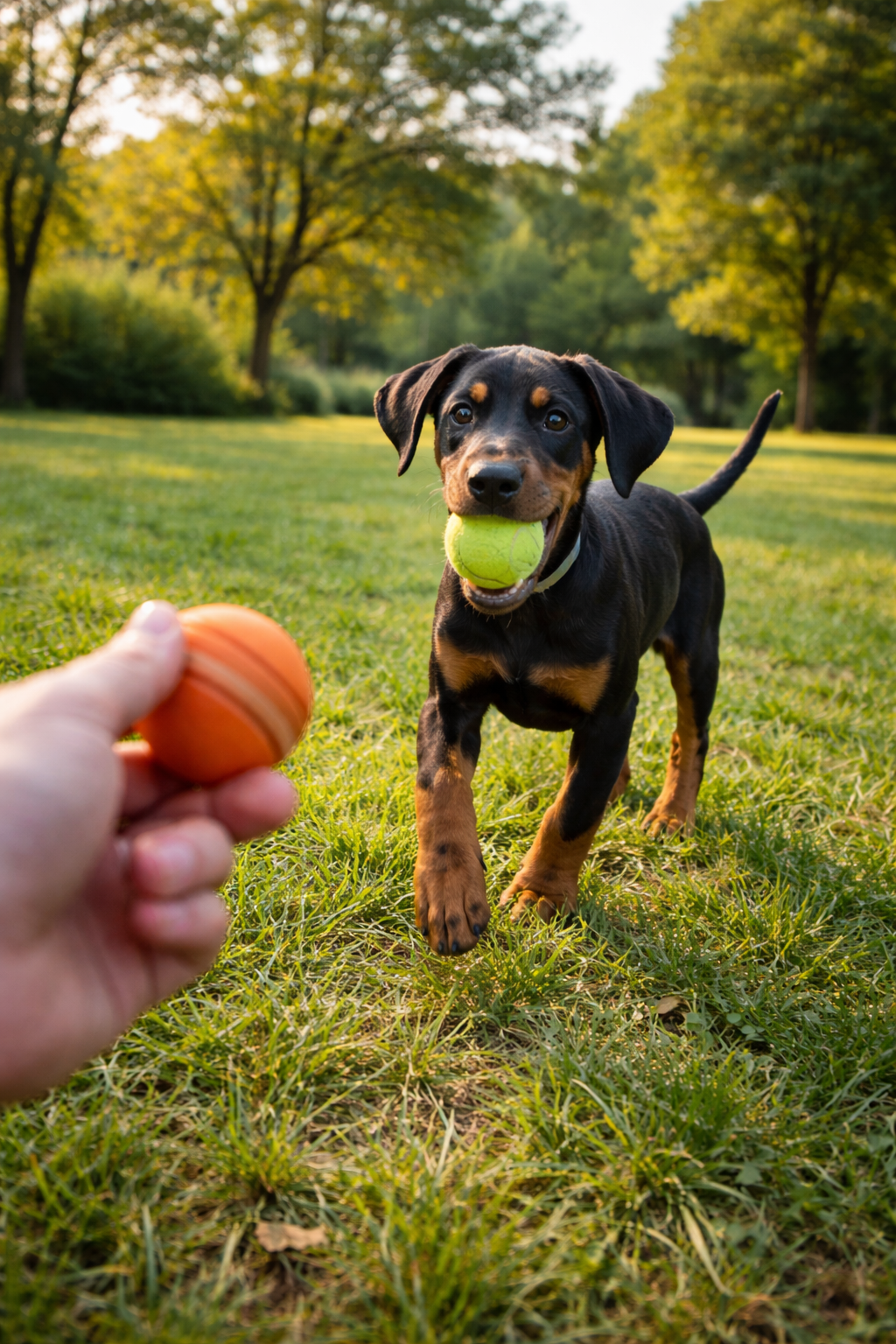
🎯 1. Start with Basic Commands
Begin with simple commands like sit, stay, come, and down. These form the foundation of all training.
👉 Tip: Practice daily for better results.
🧁 2. Use Positive Reinforcement
Reward your dog with treats, praise, or toys when they follow commands.
✔️ Good behavior = reward
❌ Bad behavior = ignore or redirect
This helps your dog understand what you expect.
⏰ 3. Keep Training Sessions Short
Dogs have short attention spans.
Ideal time: 10–15 minutes
Frequency: 2–3 times a day
Short sessions keep your dog engaged and prevent boredom.
🔁 4. Be Consistent
Use the same commands and tone every time.
For example:
Always say “Sit” instead of sometimes saying “Sit down” or “Sit please”.
Consistency avoids confusion.
🏡 5. Train in a Distraction-Free Environment
Start training in a quiet place at home. Once your dog learns, slowly introduce distractions.
🚫 6. Avoid Punishment
Shouting or hitting can make your dog fearful and damage trust.
Instead:
✔️ Redirect behavior
✔️ Stay calm and patient
🦮 7. Socialize Your Dog
Expose your dog to different people, pets, and environments.
This helps reduce fear, aggression, and anxiety.
🧠 8. Be Patient and Realistic
Every dog learns at a different pace.
Some may learn in days, others take weeks—both are normal.
Begin with simple commands like sit, stay, come, and down. These form the foundation of all training.
👉 Tip: Practice daily for better results.
🧁 2. Use Positive Reinforcement
Reward your dog with treats, praise, or toys when they follow commands.
✔️ Good behavior = reward
❌ Bad behavior = ignore or redirect
This helps your dog understand what you expect.
⏰ 3. Keep Training Sessions Short
Dogs have short attention spans.
Ideal time: 10–15 minutes
Frequency: 2–3 times a day
Short sessions keep your dog engaged and prevent boredom.
🔁 4. Be Consistent
Use the same commands and tone every time.
For example:
Always say “Sit” instead of sometimes saying “Sit down” or “Sit please”.
Consistency avoids confusion.
🏡 5. Train in a Distraction-Free Environment
Start training in a quiet place at home. Once your dog learns, slowly introduce distractions.
🚫 6. Avoid Punishment
Shouting or hitting can make your dog fearful and damage trust.
Instead:
✔️ Redirect behavior
✔️ Stay calm and patient
🦮 7. Socialize Your Dog
Expose your dog to different people, pets, and environments.
This helps reduce fear, aggression, and anxiety.
🧠 8. Be Patient and Realistic
Every dog learns at a different pace.
Some may learn in days, others take weeks—both are normal.

Comments (1)
Leave a Comment