Why Puppy Food Is Different from Adult Dog Food
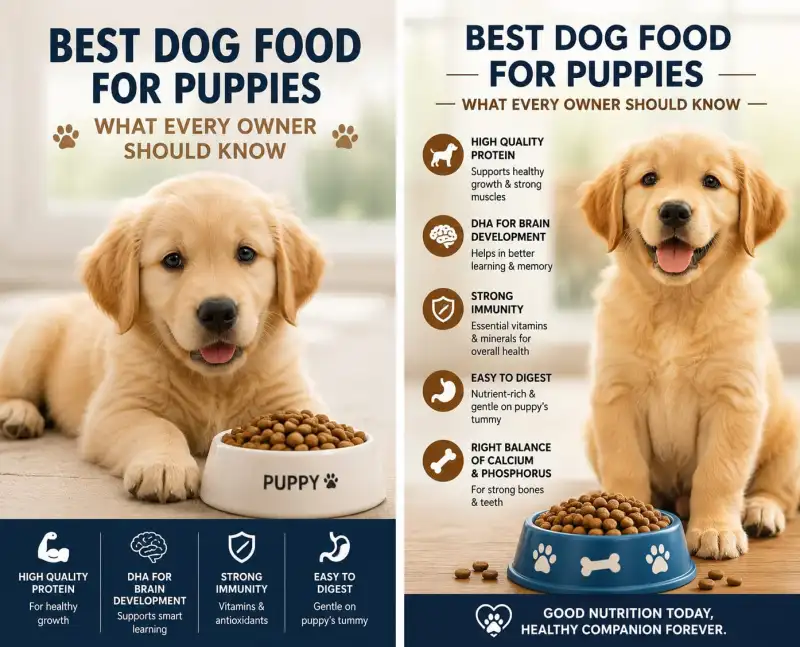
Puppies grow rapidly and require significantly more nutrients than adult dogs. Their diet should contain the right balance of protein, healthy fats, vitamins, and minerals to support developing muscles, bones, and organs.
Adult dog food does not provide the ideal nutrient levels needed during this crucial growth stage.
Essential Nutrients Every Puppy Needs
- High-Quality Protein
Protein supports muscle development and tissue repair.
Good protein sources include:
Chicken
Lamb
Fish
Turkey
Eggs
Look for real meat listed as the first ingredient.
- Healthy Fats
Healthy fats provide energy and support skin, coat, and brain development.
Sources include:
Fish oil
Chicken fat
Salmon oil
Flaxseed oil
Omega-3 fatty acids are especially beneficial for puppies.
- Calcium and Phosphorus
Strong bones and teeth require balanced calcium and phosphorus levels.
Too much calcium can be harmful, especially for large-breed puppies.
- DHA for Brain Development
DHA supports learning ability, memory, and eye health.
Puppies fed DHA-rich diets often show better cognitive development.
- Vitamins and Minerals
Essential vitamins such as A, D, E, and B-complex help maintain immunity and healthy metabolism.
Minerals like zinc and iron support growth and overall health.
How to Choose the Best Puppy Food
When reading a food label, look for:
- ✅ Real meat as the first ingredient
- ✅ No artificial colors or preservatives
- ✅ Balanced protein and fat levels
- ✅ DHA included
- ✅ Complete and balanced puppy formula
Avoid foods filled with excessive corn, soy, artificial flavors, or unnecessary fillers.
Dry Food vs Wet Food
Dry Food (Kibble)
Pros
Good for dental health
Easy to store
Cost-effective
Longer shelf life
Cons
Lower moisture content
Some puppies may take time to adjust
Wet Food
Pros
Highly palatable
Easier to chew
Higher moisture content
Cons
More expensive
Shorter shelf life after opening
Many owners combine dry and wet food for balanced nutrition.
Feeding Schedule by Age
Puppy Age Meals Per Day
6–12 Weeks 5 meals
3–6 Months 4 meals
6–12 Months 2-3 meals
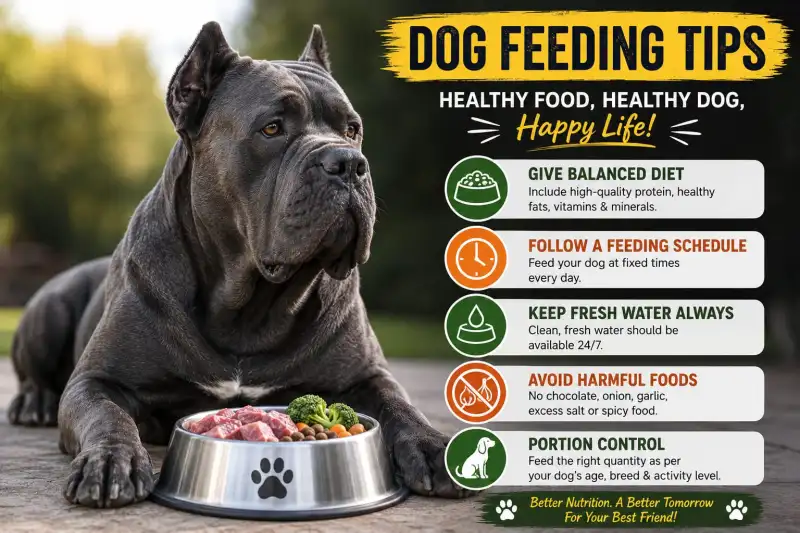
Always provide fresh, clean drinking water.
Foods You Should Never Feed Your Puppy
Avoid these harmful foods:
Chocolate
Grapes
Raisins
Onions
Garlic
Alcohol
Coffee
Xylitol (artificial sweetener)
Cooked bones
Macadamia nuts
These foods can cause serious health problems and should never be given to puppies.
Signs Your Puppy Is Eating the Right Food
A healthy puppy should have:
Steady weight gain
Bright eyes
Shiny coat
High energy levels
Firm stools
Healthy skin
Good appetite
If your puppy experiences vomiting, diarrhea, itching, or poor growth, consult your veterinarian and review the diet.
When to Switch to Adult Dog Food
Most small breeds can transition to adult food around 10–12 months.
Large and giant breeds may need puppy food for 12–18 months to support proper skeletal development.
Transition gradually over 7–10 days to avoid digestive upset.
Tips for New Puppy Owners
Feed at the same time every day.
Avoid frequent diet changes.
Measure portions carefully.
Limit treats to less than 10% of daily calories.
Store food in an airtight container.
Monitor body condition regularly.
Consistency is one of the keys to raising a healthy puppy.
Final Thoughts
Choosing the best dog food for your puppy is one of the most important decisions you'll make as a pet owner. A balanced, high-quality diet provides the foundation for lifelong health, strong immunity, and proper development.
Investing in good nutrition during puppyhood can help prevent future health issues and ensure your furry companion grows into a happy, active, and healthy adult dog.
Frequently Asked Questions (FAQs)
Which food is best for puppies?
A complete and balanced puppy formula with real meat as the first ingredient, healthy fats, DHA, vitamins, and minerals is generally the best choice.
Can puppies eat homemade food?
Yes, but homemade diets should be nutritionally balanced. Consult a veterinarian or a pet nutritionist before relying solely on homemade meals.
How often should I feed my puppy?
Young puppies usually need 4 meals a day, gradually reducing to 2 meals a day by around one year of age.
Is grain-free food better for puppies?
Not necessarily. Unless your puppy has a diagnosed allergy or intolerance, a balanced diet containing grains can be perfectly healthy.
Can I mix wet and dry puppy food?
Yes. Mixing wet and dry food can improve taste, increase moisture intake, and provide variety while maintaining balanced nutrition.




Comments (0)
Leave a Comment