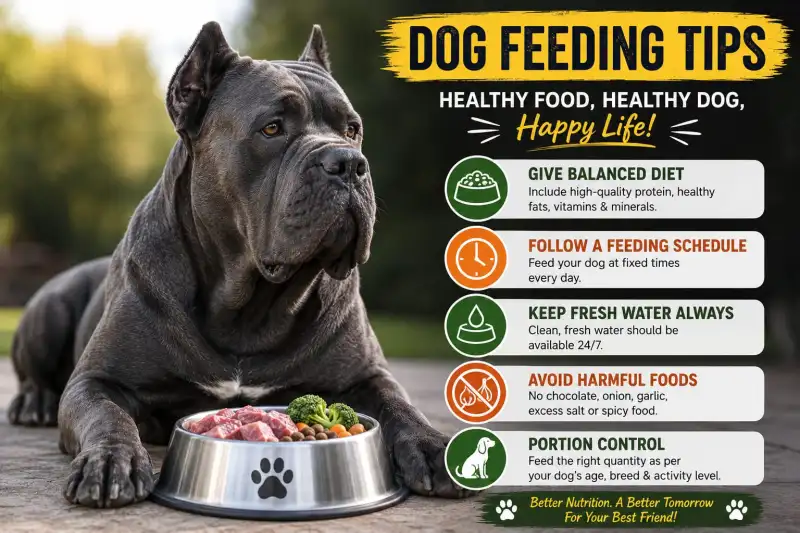
Why Proper Feeding Matters
A balanced diet provides the nutrients your dog needs for:
- Healthy muscles and bones
- Strong immune system
- Healthy skin and shiny coat
- Better digestion
- High energy levels
- Healthy brain function
Poor feeding habits can contribute to obesity, digestive issues, nutritional deficiencies, diabetes, joint problems, and a shorter lifespan.
1. Overfeeding Your Dog
One of the biggest mistakes dog owners make is giving too much food.
Many dogs will continue eating even when they're already full. Extra calories quickly lead to weight gain and obesity.
Signs of Overfeeding
- Rapid weight gain
- Difficulty walking or running
- Fat accumulation around the ribs
- Low energy
- Heavy breathing after mild activity
Tip
Measure each meal using a measuring cup or kitchen scale instead of estimating portions.
2. Giving Too Many Treats
Treats are useful for training, but excessive treats can add hundreds of unnecessary calories every day.
Healthy treats should make up no more than 10% of your dog's daily calorie intake.
Choose healthier treats like:
- Boiled chicken (without seasoning)
- Carrot sticks
- Apple slices (without seeds)
- Pumpkin
- Commercial healthy dog treats
3. Feeding Human Food
Many human foods are unhealthy—or even dangerous—for dogs.
Avoid feeding:
- Chocolate
- Grapes
- Raisins
- Onions
- Garlic
- Xylitol-containing products
- Alcohol
- Caffeine
- Cooked bones
Even spicy, oily, or salty foods can upset your dog's digestive system.
4. Changing Food Suddenly
Switching dog food overnight can cause:
- Diarrhea
- Vomiting
- Gas
- Loss of appetite
Correct Transition Method
- Day 1–2: 75% old food + 25% new food
- Day 3–4: 50% old food + 50% new food
- Day 5–6: 25% old food + 75% new food
- Day 7: 100% new food
A gradual transition helps prevent digestive upset.
5. Free Feeding All Day
Leaving food available all day may encourage overeating and makes it difficult to monitor appetite changes.
Instead:
- Feed adult dogs 2 meals daily.
- Feed puppies 3–4/5 smaller meals daily.
- Remove uneaten food after 20–30 minutes.
6. Ignoring Water Intake
Fresh, clean drinking water is just as important as food.
Always ensure your dog has access to clean water.
Signs of dehydration include:
- Dry gums
- Sunken eyes
- Lethargy
- Loss of skin elasticity
7. Feeding According to Breed Alone
Two Labrador Retrievers may require different amounts of food depending on:
- Age
- Activity level
- Weight
- Health condition
- Metabolism
Always adjust feeding based on your individual dog's needs rather than breed alone.
8. Feeding Low-Quality Food
Cheap dog foods often contain excessive fillers and fewer high-quality nutrients.
Look for foods containing:
- Real animal protein
- Healthy fats
- Vitamins and minerals
- Digestible carbohydrates
- Omega-3 and Omega-6 fatty acids
Read ingredient labels before purchasing.
9. Ignoring Life Stage Nutrition
Nutritional needs change throughout life.
Choose food specifically formulated for:
- Puppies
- Adult dogs
- Senior dogs
- Pregnant or nursing dogs
Each stage requires a different balance of nutrients.
10. Not Monitoring Body Condition
Don't rely only on the number on the weighing scale.
Check your dog's body condition regularly.
A healthy dog should:
- Have a visible waist when viewed from above.
- Have ribs that are easily felt but not prominently visible.
- Move comfortably without excessive fat around the abdomen.
Bonus Dog Feeding Tips
- Feed meals at the same time every day.
- Store dog food in a cool, dry place.
- Wash food and water bowls daily.
- Avoid sudden diet changes.
- Consult your veterinarian before introducing supplements.
- Monitor your dog's weight every month.
- Provide regular exercise along with a balanced diet.
Frequently Asked Questions (FAQs)
How many times should I feed my adult dog?
Most healthy adult dogs do well with two meals per day, while puppies generally require three to five smaller meals.
Is homemade food better than commercial dog food?
A properly balanced homemade diet can be healthy, but it must provide all essential nutrients. Commercial foods formulated to meet recognized nutritional standards are convenient and nutritionally complete for most dogs.
Can I mix wet and dry food?
Yes. Mixing wet and dry food is common and can improve taste and hydration. Adjust portion sizes to avoid overfeeding.
How do I know if I'm feeding too much?
Weight gain, loss of a visible waist, difficulty feeling the ribs, and reduced activity are common signs that your dog may be consuming too many calories.
Final Thoughts
Proper feeding is one of the most important aspects of responsible dog ownership. Avoiding common feeding mistakes can help prevent obesity, digestive disorders, and nutritional deficiencies while supporting your dog's overall health and longevity.
When in doubt about your dog's diet, portion size, or nutritional needs, consult your veterinarian. Every dog is unique, and a personalized feeding plan is the best way to keep your companion healthy and happy.



Comments (0)
Leave a Comment