
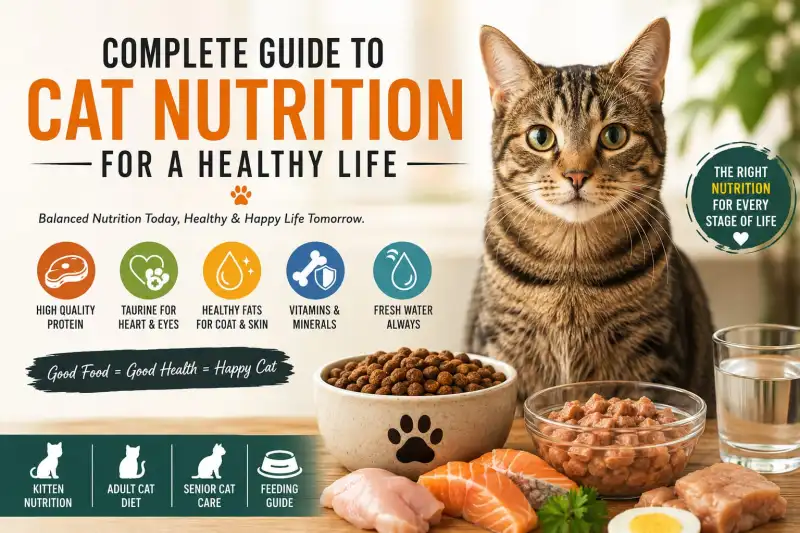
Complete Guide to Cat Nutrition for a Healthy Life
Cats are intelligent, graceful, and affectionate companions, but their health depends greatly on proper nutrition. Unlike dogs, cats are obligate carnivores, meaning they require nutrients that are naturally found in animal-based foods. A balanced diet supports healthy growth, strong immunity, shiny coats, proper digestion, and a longer lifespan.
Whether you have a playful kitten, an active adult cat, or a senior feline, understanding their nutritional needs is essential for keeping them healthy.
In this comprehensive guide, we'll explain everything you need to know about feeding your cat.
Why Proper Nutrition Matters
A well-balanced diet helps your cat:
Maintain ideal body weight
Build strong muscles
Develop healthy bones and teeth
Support brain and eye development
Improve skin and coat health
Strengthen immunity
Reduce the risk of urinary and kidney diseases
Increase life expectancy
Poor nutrition can lead to obesity, diabetes, urinary problems, digestive disorders, poor coat quality, and nutritional deficiencies.
Essential Nutrients Every Cat Needs
- High-Quality Animal Protein
Protein is the most important nutrient for cats.
It supports:
Muscle development
Tissue repair
Hormone production
Immune function
Healthy metabolism
Good protein sources include:
Chicken
Turkey
Fish
Lamb
Duck
Eggs
Cats require a much higher protein intake than dogs.
- Taurine
Taurine is an essential amino acid that cats cannot produce in sufficient quantities.
Deficiency may lead to:
Blindness
Heart disease
Poor reproduction
Weak immunity
Animal meat naturally contains taurine, which is why vegetarian diets are unsuitable for cats.
- Healthy Fats
Healthy fats provide energy and support:
Healthy skin
Soft shiny coat
Brain development
Vitamin absorption
Omega-3 and Omega-6 fatty acids are especially beneficial.
Sources include:
Fish oil
Salmon
Chicken fat
- Vitamins
Cats require several vitamins, including:
Vitamin A
Vitamin D
Vitamin E
Vitamin K
Vitamin B Complex
Unlike humans, cats cannot efficiently convert beta-carotene into Vitamin A.
- Minerals
Important minerals include:
Calcium
Phosphorus
Zinc
Magnesium
Potassium
Iron
These support bone strength, nerve function, blood formation, and overall health.
- Water
Hydration is often overlooked.
Cats naturally drink less water because their ancestors evolved in desert environments.
Encourage water intake by:
Providing fresh water daily
Feeding wet food
Using water fountains
Keeping bowls clean
Adequate hydration helps reduce urinary tract problems.
Nutritional Needs by Life Stage
Kitten (0–12 Months)
Growing kittens require:
High protein
High calories
DHA for brain development
Calcium for bones
Frequent meals
Feed 3–4 meals daily.
Adult Cat (1–7 Years)
Adult cats need balanced nutrition to maintain:
Healthy weight
Lean muscle
Good digestion
Strong immunity
Feed according to body weight and activity level.
Senior Cat (7+ Years)
Senior cats may require:
Easily digestible protein
Joint-support nutrients
Controlled calories
Increased moisture
Kidney-friendly diets when advised by a veterinarian
Routine health check-ups become increasingly important.
Wet Food vs Dry Food
Dry Food
Advantages:
Convenient
Cost-effective
Helps reduce plaque accumulation
Longer shelf life
Limitations:
Lower moisture content
Wet Food
Advantages:
Higher water content
Highly palatable
Better hydration
Easier to chew
Limitations:
More expensive
Shorter shelf life after opening
A combination of both often works well for many healthy cats.
Feeding Schedule
Kittens
3–4 meals daily
Adult Cats
2 meals daily
Senior Cats
2–3 smaller meals depending on health condition
Avoid leaving unlimited food available all day if your cat tends to overeat.
Foods Cats Should Never Eat
Certain human foods are toxic or harmful to cats.
Avoid:
Chocolate
Onions
Garlic
Grapes
Raisins
Alcohol
Caffeine
Xylitol
Raw bread dough
Cooked bones
Excess dairy products
If your cat accidentally consumes any toxic food, contact a veterinarian immediately.
Homemade Cat Food
Some owners prefer homemade diets.
If choosing homemade food:
Use fresh ingredients
Include animal protein
Avoid excessive carbohydrates
Ensure balanced vitamins and minerals
Consult a veterinarian before long-term feeding
Improper homemade diets can cause nutritional deficiencies.
How Much Should You Feed?
The ideal amount depends on:
Age
Body weight
Activity level
Breed
Health status
Type of food
Always follow the feeding guide provided by the food manufacturer and adjust according to your veterinarian's advice.
Signs Your Cat Is Getting Proper Nutrition
Healthy cats generally have:
Bright eyes
Glossy coat
Healthy skin
Good appetite
Lean body condition
Regular bowel movements
High energy
Healthy body weight
Signs of Poor Nutrition
Watch for:
Weight loss
Obesity
Hair loss
Dry coat
Frequent vomiting
Diarrhea
Weakness
Poor appetite
Bad breath
Skin problems
Early veterinary consultation can prevent serious health issues.
Common Feeding Mistakes
Many cat owners unknowingly make mistakes such as:
Overfeeding treats
Feeding only table scraps
Offering excessive milk
Ignoring portion control
Sudden food changes
Not providing enough water
Choosing food based only on price
Avoiding these mistakes contributes significantly to long-term health.
Tips for Keeping Your Cat Healthy
Feed a nutritionally balanced diet.
Maintain a regular feeding schedule.
Provide clean drinking water at all times.
Monitor body weight monthly.
Limit treats to occasional rewards.
Encourage daily play and exercise.
Schedule routine veterinary check-ups.
Transition to new foods gradually over 7–10 days.
Frequently Asked Questions (FAQs)
Can cats eat dog food?
No. Dog food lacks several essential nutrients that cats require, including adequate taurine.
Is milk good for cats?
Most adult cats are lactose intolerant. Fresh water is a better choice.
How often should I feed my cat?
Adult cats generally do well with two meals per day, while kittens require more frequent feeding.
Is grain-free food necessary?
Not necessarily. Grain-free diets are only appropriate in specific situations and should be chosen based on your veterinarian's recommendation.
How can I tell if my cat is overweight?
You should be able to feel your cat's ribs without excessive fat covering, and there should be a visible waist when viewed from above.
Conclusion
Proper nutrition is one of the most important investments you can make in your cat's health. A balanced, high-quality diet supports growth, immunity, healthy skin and coat, proper digestion, and a long, active life. By understanding your cat's nutritional needs at every life stage and avoiding common feeding mistakes, you can help your feline companion enjoy many healthy years by your side.
If you're unsure which diet is best for your cat, consult a qualified veterinarian for personalized nutritional guidance.
Keywords: Cat Nutrition Guide, Cat Food Guide, Best Cat Food, Kitten Nutrition, Adult Cat Diet, Senior Cat Nutrition, Healthy Cat Diet, Cat Feeding Schedule, Cat Food Tips, Pet's Heaven.





Comments (0)
Leave a Comment